Unearthing Hidden Data: How Illinois Prairies Serve as a Living Laboratory for Ecologists

Recent Trends in Prairie-Based Ecological Research
Over the past several years, ecologists have increasingly turned to Illinois prairies as a tool for studying ecosystem dynamics under real-world conditions. A growing number of long-term monitoring projects now use remnant and restored tallgrass prairie sites across the state to track changes in plant diversity, soil carbon, and pollinator populations. Researchers are moving away from purely controlled greenhouse experiments toward landscape-scale observational studies that capture the complexity of climate variability, land-use history, and species interactions.
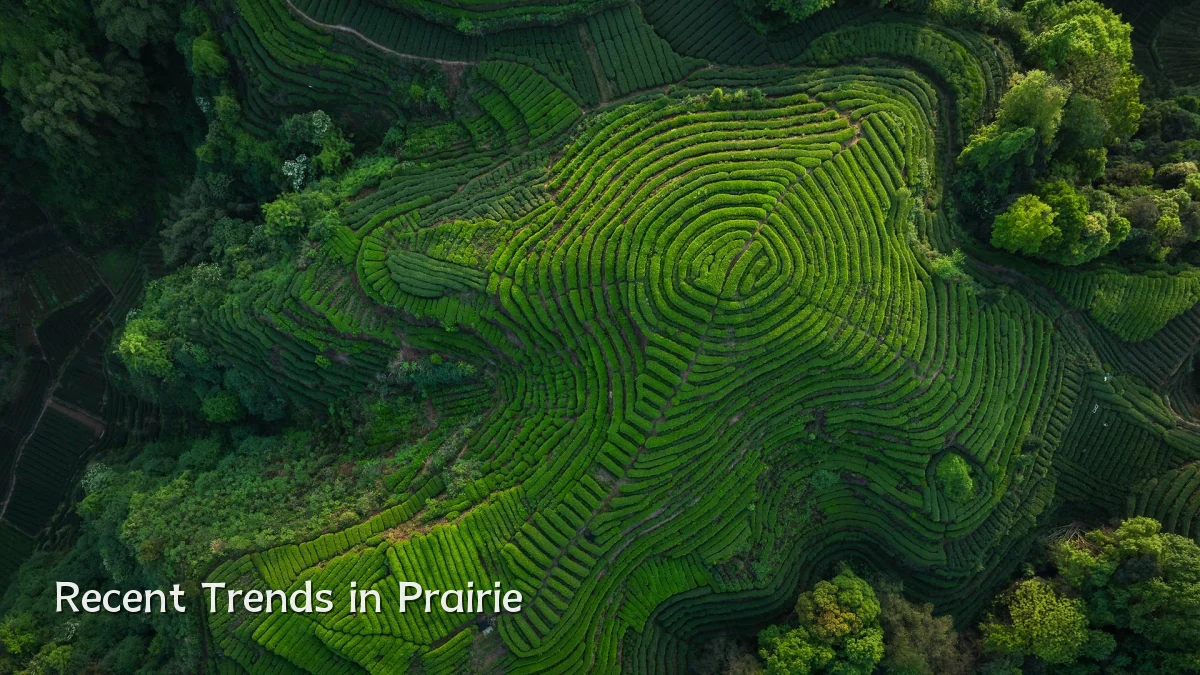
- Use of automated sensors for real-time soil moisture and temperature logging in prairie strips.
- Integration of drone imagery and satellite remote sensing to map vegetation phenology.
- Collaborative networks linking university labs, state agencies, and private land stewards to share data standards.
Background: Why Illinois Prairies Matter for Data-Driven Ecology
Illinois sits at a crossroads of the original tallgrass prairie ecosystem—a biome that once covered more than 140 million acres of North America but now exists in fragmented patches, with less than 0.01% of its original extent remaining. These remnant prairies, along with restored plots of varying ages, offer ecologists a rare chance to study baseline biodiversity and ecosystem function without the confounding effects of heavy agricultural inputs. Because many Illinois prairies have documented histories dating back to early land surveys, researchers can cross-reference current observations with historical data over multiple decades.

“What makes Illinois prairies unique is the combination of accessible remnant sites, public land ownership, and a century-plus of botanical records,” say many ecologists active in the region.
User Concerns and Practical Challenges
For researchers and land managers, obtaining consistent, high-quality data from prairies is not straightforward. Common concerns include:
- Data comparability: Different institutions may collect vegetation cover, soil samples, or pollinator observations using incompatible protocols, making meta-analysis difficult.
- Funding continuity: Long-term prairie studies often rely on short-cycle grants, risking gaps in monitoring that break time series.
- Climate variability: Extreme drought or flood years can mask underlying ecological trends, requiring multi-year averaging to detect meaningful signals.
- Invasive species pressure: Non-native plants can alter the very conditions researchers aim to study, demanding adaptive management that introduces a treatment variable.
Likely Impact on Research and Conservation
The growing availability of open-access data from Illinois prairie sites is expected to enable several advances in ecology. For example, comparative studies across restoration chronosequences—ranging from one-year-old plantings to century-old remnants—may reveal predictable trajectories for carbon accumulation and pollinator recovery. Such findings could inform state-level conservation incentive programs that pay landowners to establish prairie buffers. Moreover, the coupling of microclimate data with species occurrence records will help refine models of how grassland biota respond to shifting temperature and precipitation regimes.
| Data Type | Potential Contribution |
|---|---|
| Soil organic carbon | Quantify sequestration rates in restorations of different ages |
| Plant species turnover | Identify management thresholds that maintain native cover |
| Pollinator visitation | Link flowering phenology to nesting resource availability |
| Microbial community composition | Correlate soil health indicators with root biomass |
What to Watch Next
Ecologists and data scientists are now working on standardizing observation protocols across multiple prairie research sites in Illinois, a step that would dramatically increase the statistical power of regional syntheses. Watch for progress on the following fronts:
- Interoperable metadata frameworks—efforts to tag each observation with site history, weather, and management context so that data can be pooled across studies.
- Citizen science integration—smartphone apps that allow volunteers to record prairie species occurrences, expanding geographic coverage without increasing professional staff time.
- Machine learning applications—models trained on decades of Illinois prairie data to predict optimal restoration mixes under future climate scenarios.
- Policy feedback loops—how research findings from living laboratories influence the design of regional conservation programs (e.g., USDA Conservation Reserve Program prairie practice standards).